
a springtime reckoning
the good, the bad, the confounding

Hi, friends—
I’ve been reading Annie Dillard’s Pilgrim at Tinker Creek this year, through the early spring months. It’s arguably some of the best nature writing that has ever been published, an astounding ecological treatise. In it, Dillard chronicles a year of living in and around Virginia’s Tinker Creek, where her home was at the time. To be clear, I don’t mean that she documented her living! I mean she documented ALL the living—muskrats and grasshoppers, pet store gold fish and macroinvertebrates that she scooped up in buckets from the river and took home to examine under the microscope.
A couple of weeks ago, I said this about the book: “I try to re-read this love letter to the natural world at least once every few years. It is a master class in paying attention. It is a master class in remembering that no detail is too small—that, in fact, the smallest details are often what shake the reader the most.”
But what I didn’t say was how, reading Pilgrim at Tinker Creek this spring has helped me reckon, at least a little bit, with my own challenges with spring.
I’ve long been disenchanted with spring. So much so that I wrote an essay about it three years ago, in which I build my case everyone else’s favorite season! To be fair, I was still reeling from the destabilization of 2020 and etc. All the same, though, I could say then—as I can now—that I have always disliked spring, always felt most distracted during this season, most disoriented and unstable.
So imagine how validated I felt when I stumbled upon this, from Dillard, discussing springtime’s fecundity:
The driving force behind all this fecundity is a terrible pressure I also must consider, the pressure of birth and growth, the pressure that splits the bark of trees and shoots out seeds, that squeezes out the egg and bursts the pupa, that hungers and lusts and drives the creature relentlessly towards its own death. Fecundity, then, is what I have been thinking about, fecundity and the pressure of growth. Fecundity is an ugly word for an ugly subject. It is ugly, at least, in the eggy animal world. I don’t think it is for plants.
The pressure of growth! This is exactly it! This is exactly the energy that destabilizes me, that makes me want to crawl into bed and not come out until July, when everything is finally still, settled, even beginning to wilt.
At the same time, though, reading Dillard helped me to realize that I have changed my relationship to spring, at least by degrees, even if it hasn’t been intentional. I can observe my recoil without completely losing myself in the panic. I still feel the chaotic energy swirling all around me, but now I am better able to ground and calm myself, actively and with intention.
Several years ago, I undertook an intentional effort to get into right relationship with winter. My whole life, I have hated winter simply because I do not like to be cold. I like to swim in lake water and be barefoot always and buy my vegetables at the farmers market, and those activities are not available to me in winter. My dislike of winter had less to do with winter itself, and more to do with the fact that it was not summer. So I decided I needed to embrace winter, and it has been mostly working!
Now, each year as winter roles around, I try to embrace it in all of its winter-ness, as opposed to wanting to change it, or wish it away. I vow to get outside for at least 20 minutes every day. I bundle up to walk the dogs. I light candles at three in the afternoon. And I persevere!
Spring, though! Well, spring has been more of a challenge. And while I feel my relationship to it slightly shifting, it’s definitely not “right” yet, not in any sense of the word. But maybe Dillard’s words actually give me permission to dislike it! Maybe instead of changing my mind about it, I merely need to accept that it’s a challenging time of the year for me, and I must plan accordingly.
For today, then, I’m sharing again that essay from three years ago. Please enjoy!
If you are spring-lover, by all means, please tell me why! And if there are any other spring-haters out there, I’d love to hear from you! I’d love to know that I’m not alone!
Love you all so much, Francesca xoxo
PS: After reading the essay below, you’ll want to know that a 2026 study showed an 11% drop in suicides among people aged 15-23 from July 2022 to December 2024. Hooray! The authors of the study credit the 988 Lifeline with this decrease!
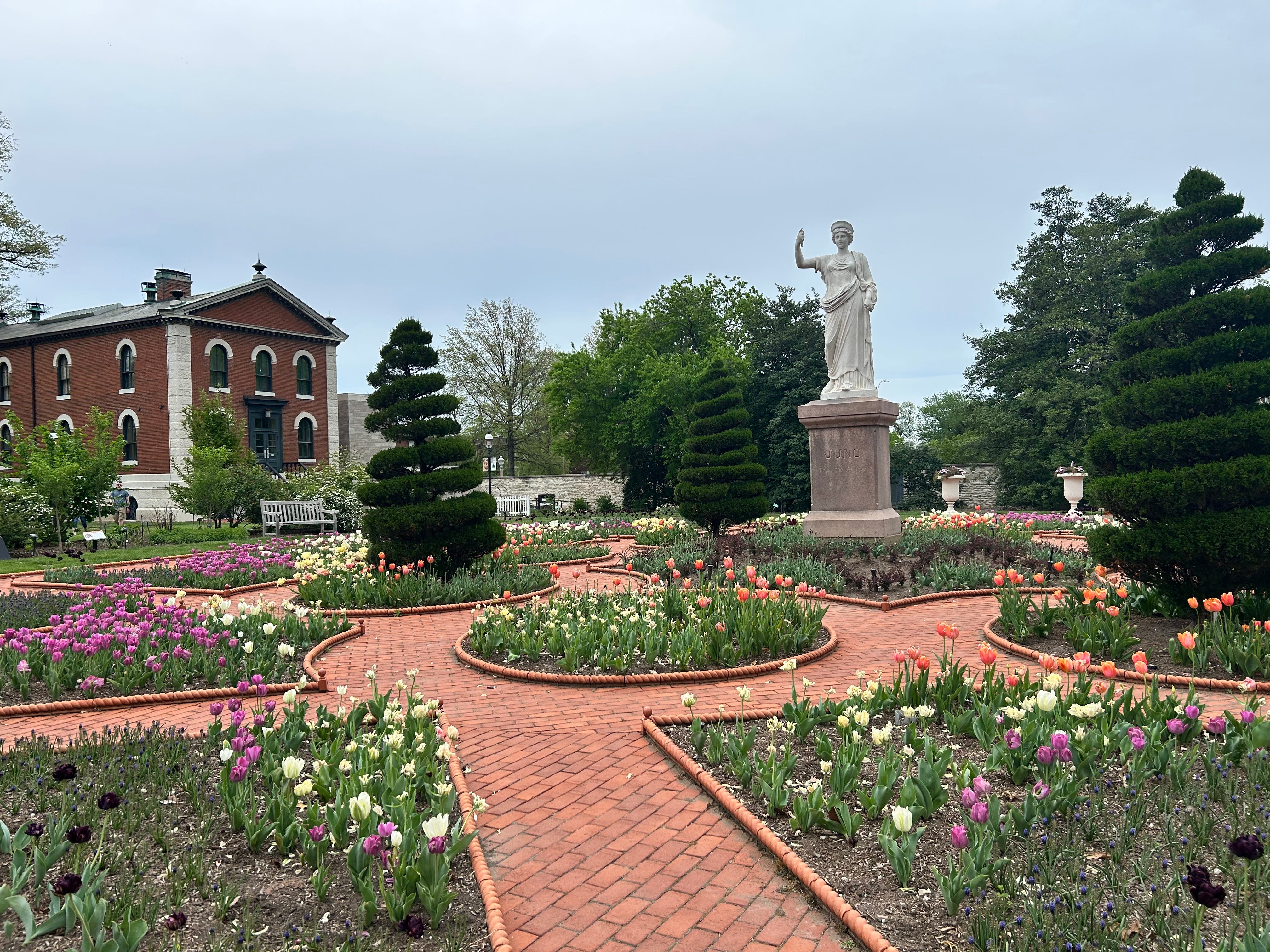

I do not like Spring. That is a bold statement, I know, but one that I feel the truth of more and more with each passing year.
I wish I were a person who disliked fewer things. Of course, there are lots of things I dislike for good reason—Elon Musk, for example, or Chick Filet. I dislike bigotry, and people who litter, and the practice of banning books. But on a personal level, I often wish I disliked *less. I wish, for example, I didn't dislike poor footwear as much as I do, especially on men. (It shrinks the dating pool considerably.) I wish I didn’t dislike the television that my children watch. (It makes it harder to listen when they want to talk to me about it.) I wish I didn’t dislike so much television, period. (It makes it harder to find a distraction when I need one.)
Disliking Spring is a challenge. It’s a challenge because everyone loves it! “Oh! The trees are budding!” “Oh, the daffodils are poking up!” “Oh, I can hear the birds singing in the morning!” So when I admit to disliking Spring, the assumption is that I’m somehow a cold-hearted, insensitive person who doesn’t care about trees, or daffodils, or birds. But I care very much about those things! I just find Spring, taken in its totality, a very challenging time of year for me, and the closest shorthand I’ve been able to come up with is to simply to say “I don’t like it.”
Several years ago, well before the pandemic and my personal challenges that showed up in tandem with its global lockdown, I admitted my dislike of Spring to my therapist. At the time, I was still married, and busy raising school-aged children. I blamed a lot of my frustration on the situational aspects of that lifestyle—end-of-school finals (for the high schoolers), picnics and parties (for the younger ones), sports championship tournaments, dance and music recitals—all the “end of year” detritus of a middle class, suburban lifestyle. I remember saying so clearly to my therapist: “Everyone complains about the month of December, with its lead-up to holiday responsibilities, but I’ll take a dozen Decembers just to offload one May.”
It turns out that some researchers believe suicides (most particularly, suicides in temporal climates) spike during the spring months. Some of the reasoning is this:
Spring can bring an onslaught of seasonal allergies, which drive inflammation levels upward. Increased inflammation is a known marker for anxiety and depression, so allergies affect our mood as much as they affect our sinuses.
Because so many are able to greet Spring with feelings of euphoria and wonder, revelry and rejoicing, those of us who don’t can often wind up feeling misaligned and even more isolated and alone than we may have felt during the winter.
As to why suicide rates are higher, I think the nervous system can provide an answer here. Polyvagal theory says that one arm of the parasympathetic nervous system (rest and digest) is the “collapsed” state, where any action at all, no matter how small, feels insurmountable. All of us experience this state to one degree or another at various times—not wanting to get up from the dinner table after a big meal, for example, or not being able to get up from the sofa at the end of the day even though we are tired and know we should put ourselves to bed. These are normal and healthy nervous system states that we eventually cycle out of. But if a nervous system gets stuck in this collapsed state for too long, we can wind up with a major depressive episode. Imagine, then, a person living in this collapsed, depressed state throughout the winter months: even if they are sad, inaction marks the depression, so suicide is not an imminent possibility. Practitioners theorize that while springtime can and might bring a burst of energy to those with wintertime depression—activating our sympathetic nervous system, stimulating our fight / flight response—this might be the very energy (the desire to DO something, as opposed to just be collapsed) that leads one to take one’s own life.
All of this is to say: I have finally come to understand that my dislike of Spring is not necessarily a personality deficit of mine. Spring feels chaotic to me, on a visceral, cellular level. This means I can never fully rest, never fully feel still, never fully feel supported by the earth in ways that are at least occasionally available to me at other times of the year. My heart rate tends to be higher during Spring. (I know this thanks to my beloved Oura.) And any despair that I might have felt during the winter months gives way to a sort of panicked terror that makes me feel like I want to crawl out of my skin. It hardly matters what I am afraid of—it could be something about one of my children, some fear that they won’t get the things that they need; it could be my own fear of the future, of being alone; it could be my fear that my writing—my art—won’t be enough to sustain me through the inevitable looming challenges of being a human. The point is that, in Spring, the fear is all-consuming and attacks me on all levels—my mind, my heart, and my physical body.
I’d like to say that I’ve learned, after all these years, to better attend to my own needs when Spring shows up. I’d like to say that I’ve become gentler with myself, that I spend less time bemoaning my difficulties and more time showing myself grace. Sadly, that wouldn’t be true. I’ve spent the last several weeks stuck inside my own suffering—feeling fearful of the unknown, feeling disconnected from myself, feeling perpetually lacking. And, instead of slowing down to make room for the truth of those experiences, I’ve been grasping at anything and everything I can find to distract myself away from it. Maybe, though, if there’s been a shift in my behavior at all, it’s that I’ve been practicing acknowledging my reactions. Maybe this spring I admitted my dislike to more people, and perhaps I’ve learned that I can survive their skewed glances, their surprise, even their disdain. Maybe being honest with oneself about one’s reaction is the necessary first step before one can begin to influence a different kind of reaction. Or maybe not. Maybe I’ll always hate Spring. But at least I don’t have to hide it any longer.
Spring has never been a great season for me either Francesca. I can blame it on the contrast between the first half of so many school-years, fall/winter which always felt like the beginning of an adventure and winter/spring which always felt feckless and urgent at the same time. I can blame it on decades of seasonal allergies that started in my twenties and (huh) seemed to subside beginning in the pandemic (when I had just retired, so maybe I was allergic to office work). I can relate it directly to a sense of "Yes, this is beautiful but it means summer is coming," and I am NOT a summer person; heat, and dressing for heat, both make me desperately uncomfortable. More recently, too, "summer's coming" means "wildfire season is coming," and I can't begin to describe the dread that clutches me each time I remember that.
And then there's the wisteria over the porch-door at my church, and the sycamore trees leafing out up and down the block, and and and ... I get it, I do. I just don't *feel* right, though, this time of year.
Francesca- I love the way you write. Up here in the great white North (Edmonton), spring always seems to come late. .We have just had 6 consecutive months where there was snow on the ground. The trees are finally budding now, showing that beautiful green that only lasts for a couple of weeks. And then will come summer. It has been a very tough year for me. None of the seasons have brought me joy. All is grey.